When you click on links to various merchants on this site and make a purchase, this can result in this site earning a commission. Affiliate programs and affiliations include, but are not limited to, the eBay Partner Network.
Over 130 years old, this card would originally have been found inside a bag of coffee on a general store counter — a small piece of everyday American history
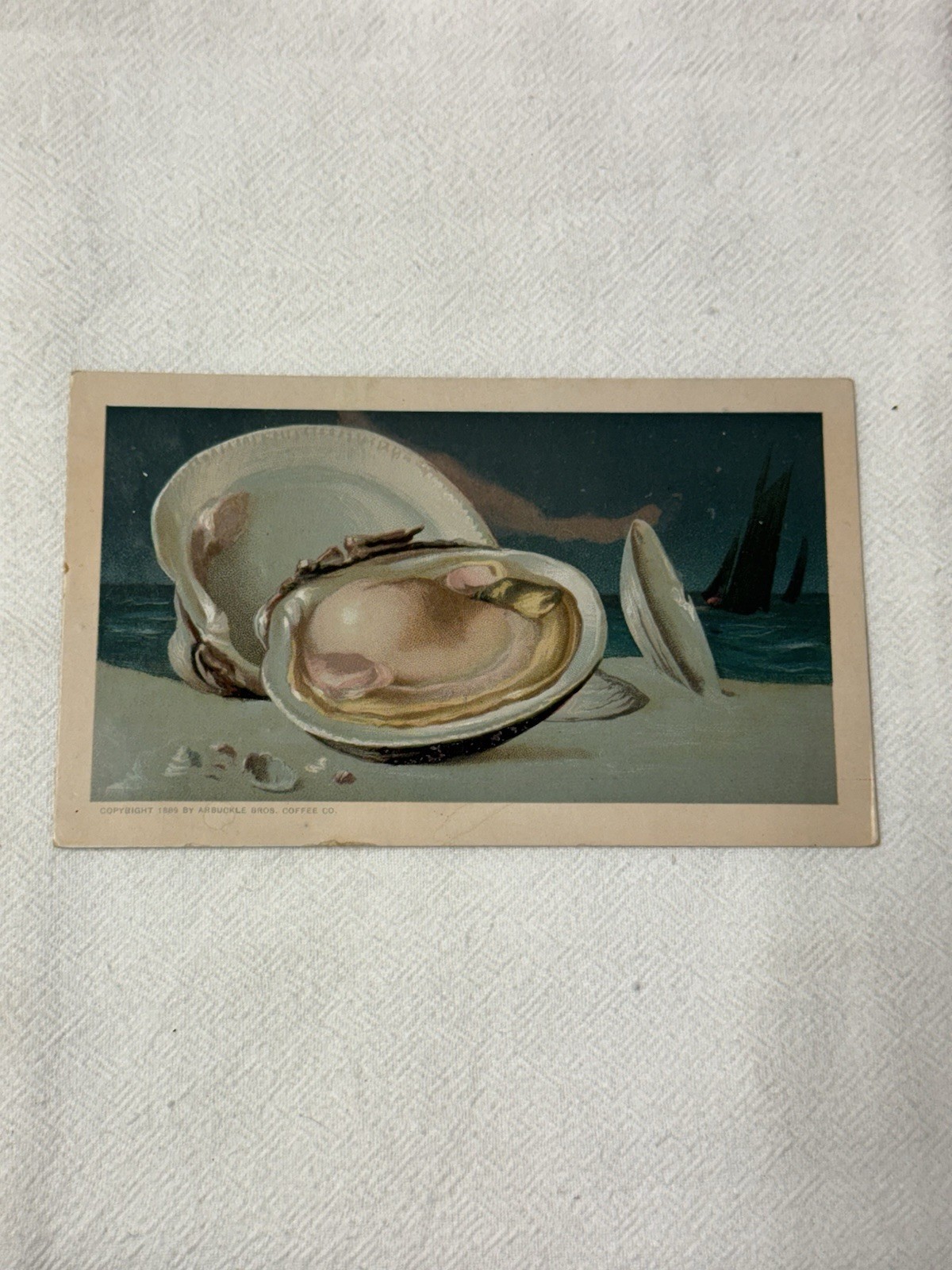
Original 1889 Arbuckle Brothers “Ariosa Coffee” advertising trade card featuring an illustrated clam/oyster seaside scene and printed cooking recipes on the reverse.
These cards were issued as promotional premiums inside packages of Arbuckle’s Ariosa Coffee in the late 19th century. Customers collected them, much like early trading cards, and they represent some of the earliest mass-market advertising ephemera in the United States.
The reverse includes period recipes and household cooking instructions (“Cooking Notes – Clams”), making the piece not only an advertising collectible but also a fascinating example of Victorian-era culinary history.
Series: Cooking Notes
Number: 38
Company: Arbuckle Brothers Coffee Company, New York
Lithography: Knapp & Co., N.Y.
Year: 1889
Condition
Good antique condition with age toning, edge wear, and light handling wear consistent with over 130 years of age. No major tears. Please review photographs carefully.
A wonderful collectible for advertising collectors, coffee memorabilia collectors, kitchen history enthusiasts, and Victorian ephemera displays.
In the late 1800s, Arbuckle Brothers of New York was one of the largest coffee companies in the world and helped popularize packaged coffee in the United States. Their Ariosa Coffee was sold in grocery stores nationwide, and to encourage customer loyalty the company placed collectible illustrated cards inside each bag. Families saved and traded them, making these some of the earliest widely distributed advertising collectibles in America — predating many baseball and tobacco cards. Today these Arbuckle trade cards are prized not only for their beautiful Victorian artwork, but also as a snapshot of everyday domestic life, cooking, and marketing in the 19th century.


 ABOUT
ABOUT